[email protected]message to say hi, etc.free palestine
partigiani, banditipartisans, bandits1945-1948
“It was the first time that the working classes armed themselves. The people took up arms and became the protagonist of their own destiny. They fought against the dictatorship to win their freedom and to demand their right to their own aspirations. The face of Italian cinema suddenly changed: no longer was it the petty or middle bourgeoisie, but the people in all their layerings. These people had now become protagonists, they wanted to matter.”
- Giuseppe De Santis, filmmaker
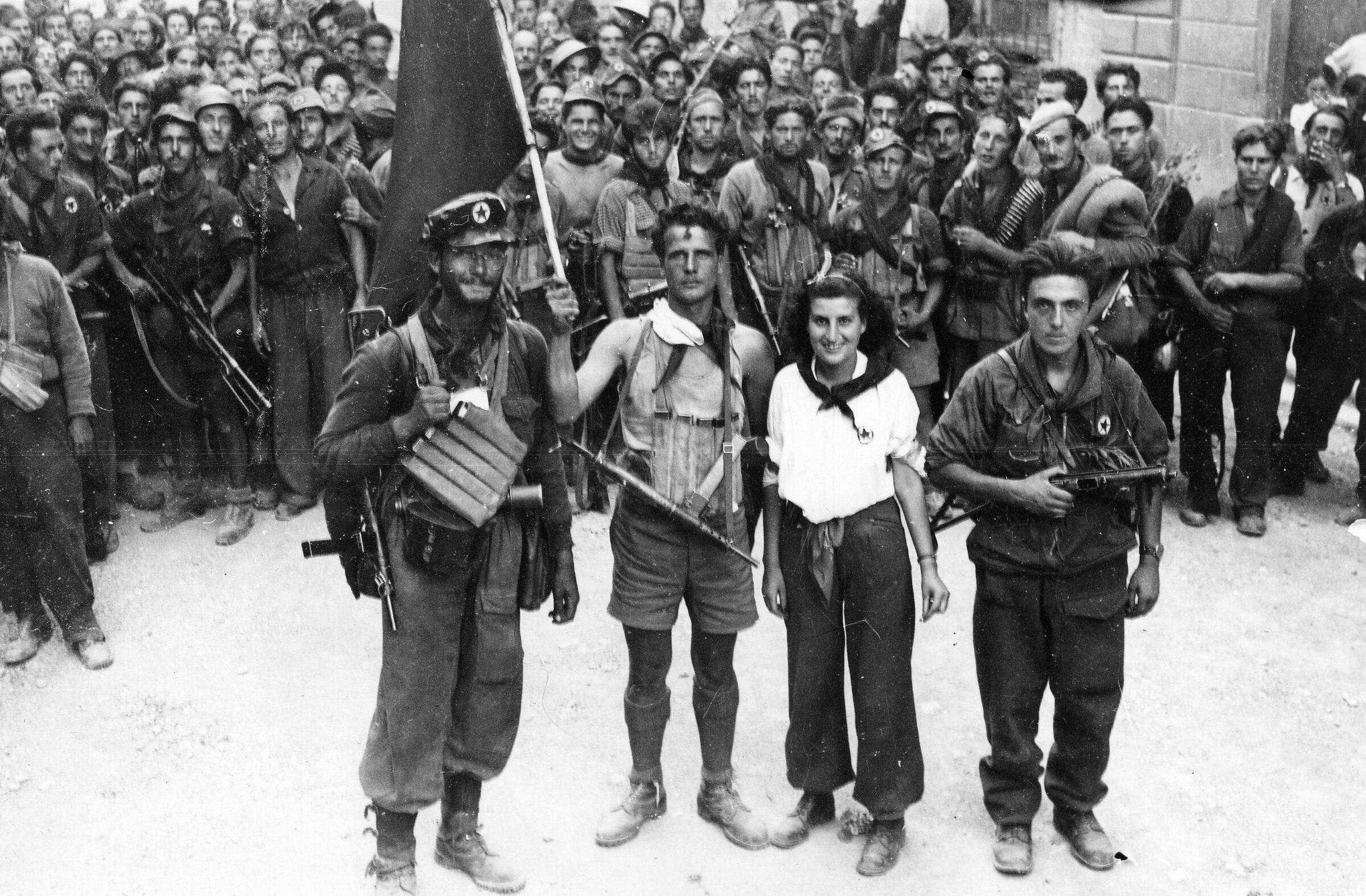
Partigiani garibaldini Firenze, Italia
Communist Partisans Florence, Italy
1944
“In a confusing way I sensed, however, that another struggle was beginning: longer, more difficult, more tiring, even if less bloody. It was no longer the question of fighting against arrogance, cruelty and violence… but… of not allowing that little flame of solidarity and fraternal humanism, which we had seen born, to die in the calm atmosphere of an apparent return to normal life.”
- Ada Gobetti, writer
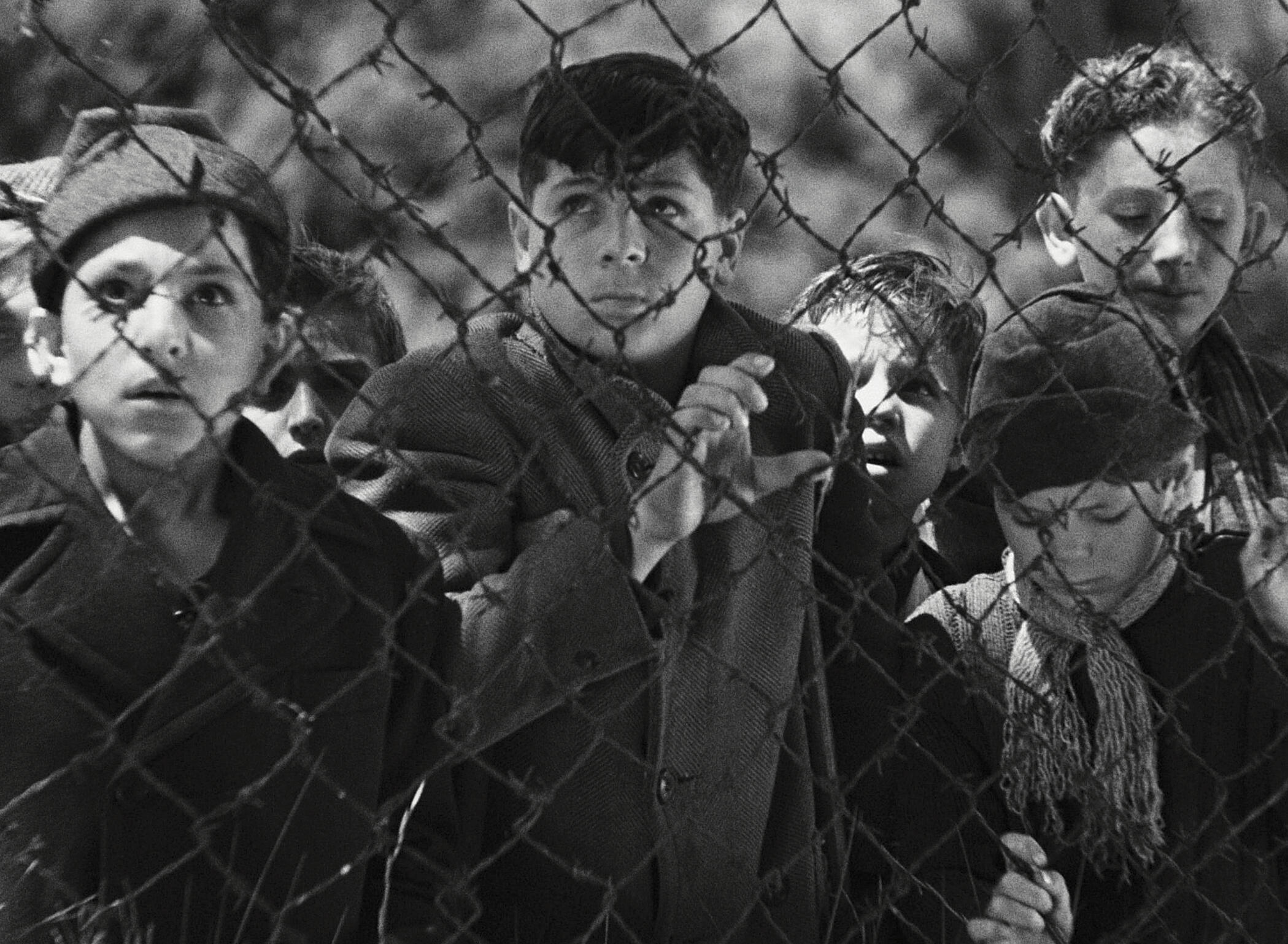
fotogramma tratto da Roma città aperta
still from Rome, Open City
1945
“The only possibility I see for getting nearer to the truth, is to try to understand sin and be tolerant of it...”
- Roberto Rossellini, filmmaker
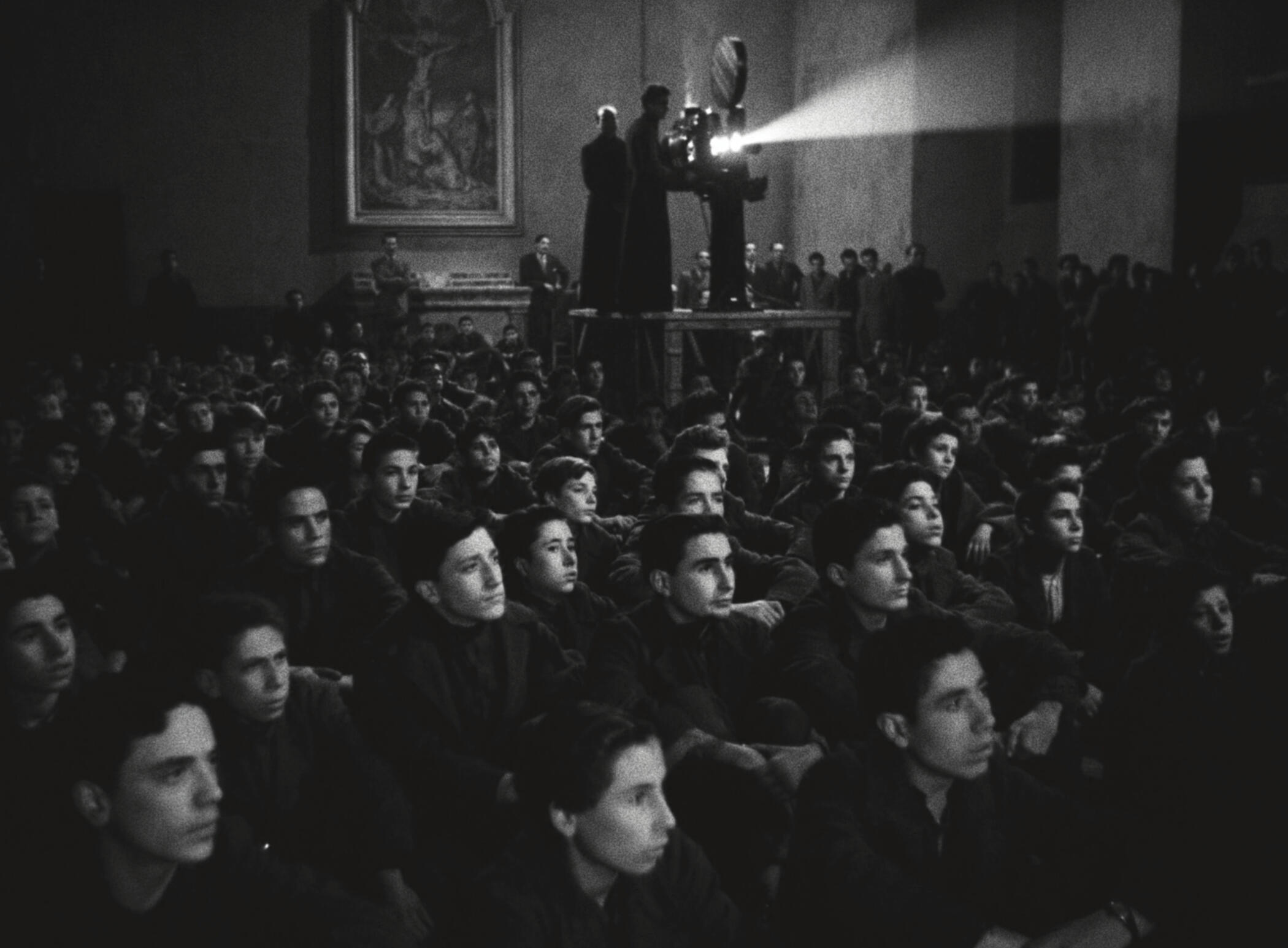
fotogramma tratto da Sciuscià
still from Shoeshine
1946
“Film is merchandise. If the Government has the right to control the export of vegetables and fruits to make sure that they are not rotten, it also has the right, and the duty, to prevent the circulation of films infected with the spirit of neo-realism.”
- Mario Scelba, Christian Democrat Minister of the Interior
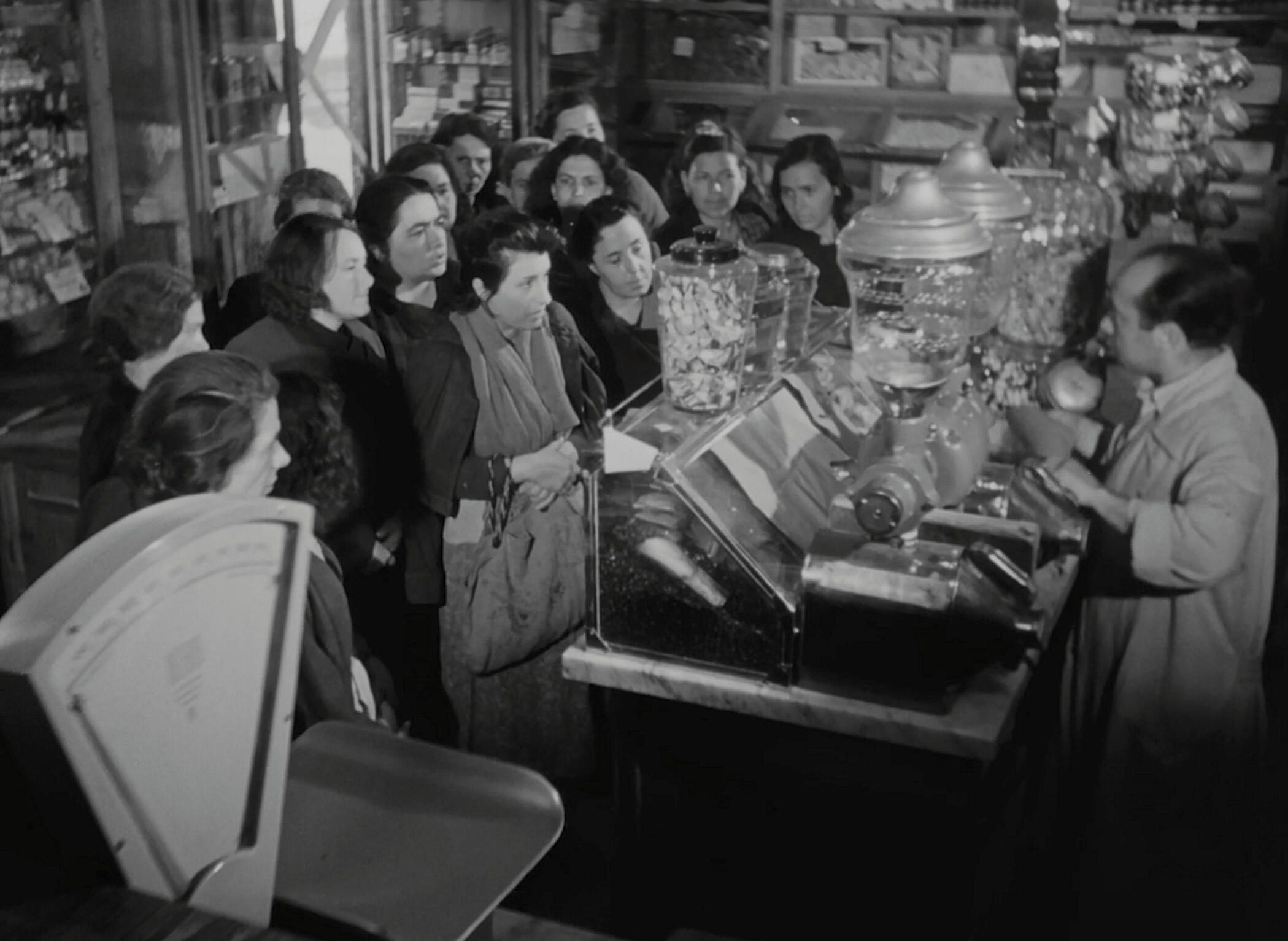
fotogramma tratto da Angelina
still from Angelina
1947
“What has happened to the cinema is exactly what has happened to the entire nation of Italy: the scum of our civil life that rose to the top during the Fascist period, and which seemed swept away forever after the war, has returned in full force and has demanded (not without a certain arrogance), and obtained, legitimacy.”
- Giuseppe Ferrara, filmmaker
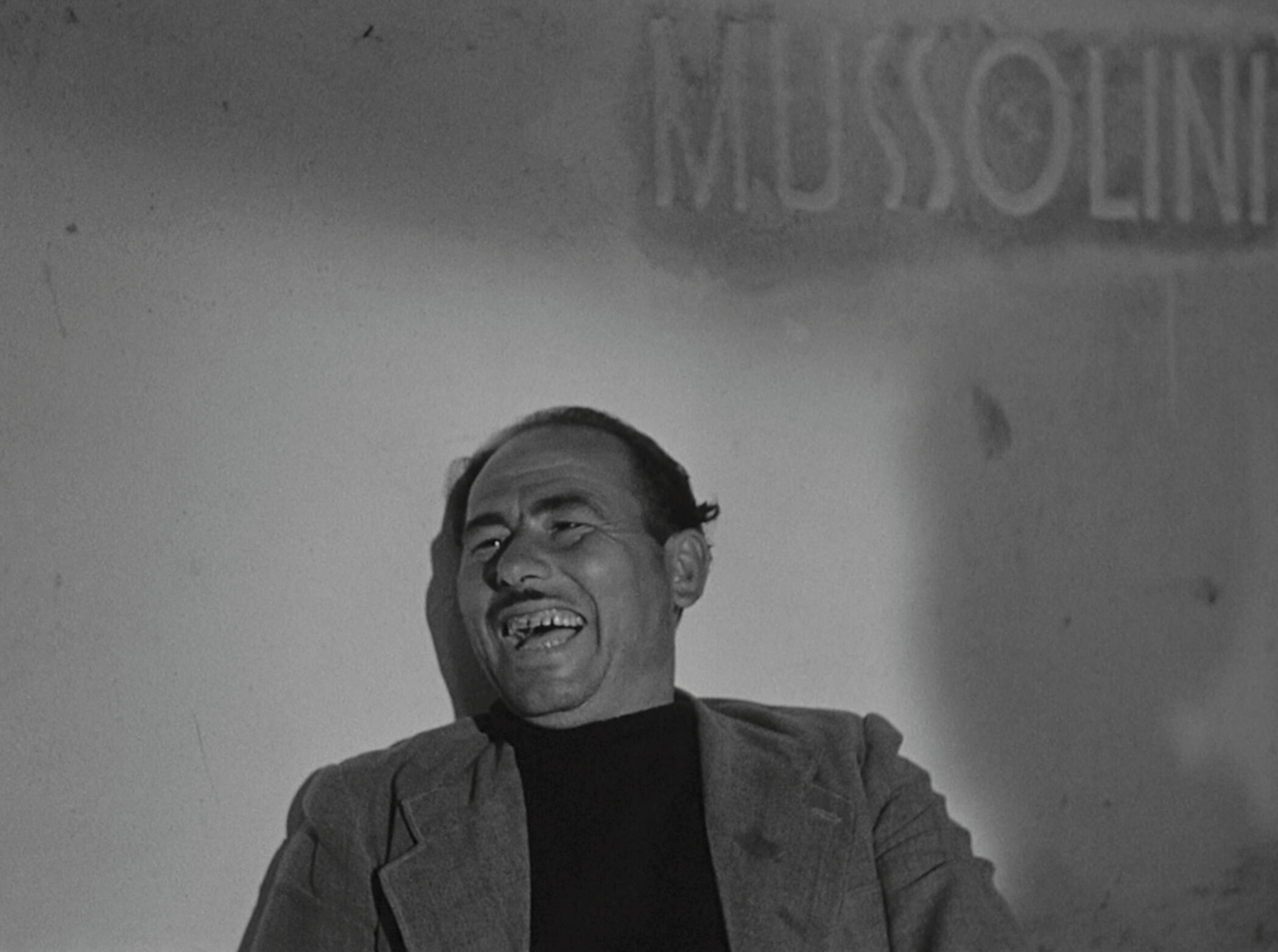
fotogramma tratta da La terra trema
still from The Earth Trembles
1948
“During the Resistance and, for a short moment, at the Liberation, all had seemed possible to us.”
- Carlo Levi, writer
In 1945 the war in Italy was frustratingly, somehow, still going on. The 8th Italian Army, the battered invasion force who fought alongside the Germans on the Eastern Front, had already been disbanded by Mussolini in February of 1943. Only a fraction would survive the freezing retreat home over the next couple months. The Allies invaded Sicily that July and soon prepared a landing force for the mainland. The same month Mussolini was ousted and imprisoned by the King and his own Grand Council of Fascists. And yet the war went on.In order to save themselves above all, Marshal Badoglio and King Vittorio Emmanuelle announced a confused armistice with the Allies on September 8th 1943. Italy had officially switched sides but in Badoglio's radio address to the nation he gave no clear orders to the hundreds of thousand soldiers who were now left to fend for themselves. Germany quickly responded by invading, and in the tragic chaos of a few chaotic days most soldiers had little choice but to surrender to the Nazis, hoping their time fighting had finally ended. As the Allies landed on the mainland in Salerno, just south of Napoli, Badoglio and the King fled south. Mussolini, who was loosely imprisoned in a hotel in the Alps was quickly freed by the Nazis and installed as head of the Italian Social Republic (RSI), a Nazi puppet state headquartered in Salò, by the end of the September. The Nazis dug in south of Rome and went about re-establishing the fascist state, including recruiting and forcibly conscripting Italian soldiers.And so the war went on and would continue on through the spring of 1945. Over those two years though, the fundamental nature of the war changed in ways that would dramatically alter the future of Italy and the lives of every Italian. The vast majority, now behind the nazi-fascist lines were presented with a series of profound choices. Do they collaborate with the new fascist-regime? Lie low waiting for an Allied victory that seemed increasingly inevitable yet indefinitely far off? Or risk their lives to resist the Nazi invasion and their collaborators? The individual rationale ranged between a spectrum of ideological commitment on one end and practical survival on the other. Already though, by the fall of 1943, scattered groups of armed partisans and civilian saboteurs organized into militant cells, beginning a new phase of the war that historian Claudio Pavone would later conceptualize as three simultaneous wars: a civil war (Italian partisans against Italian fascists), a patriotic war (against the invading Nazis), and a class war (communist and other partisan groups fighting for a new social order in the inevitable aftermath).

By 1945 the Allies had advanced up to the Green Line, a defensive line dug in across the Apennine Mountains just south of the Po Valley. Their advance stalled at the end of 1944 after failing to breakthrough before winter set in. Fighting alongside the Allies were now three hundred thousand Italians, as part of Badoglio's Co-Belligerent Forces. Five hundred thousand fought for the nazi-fascist Italian Socialist Republic. Thousands would eventually desert.The partisans also halted their campaign as winter came. Fleeing to the cold safety of the mountains while maintaing vital links to the villages and cities of the north. The actual numbers of partisans varied with the season but at its strongest in the spring and summer of 1945 one hundred fifty thousand would take up arms. About half were in the communist led Brigate Garibaldi, many others in radical liberal formations, and the rest in monarchist, socialist, catholic, or radical/anarchist groups. Roughly three hundred thousand would risk their lives and take an active role in the Resistance, including seventy thousand women. Thirty five thousand women fought as partisans and as many as five hundred commanded their own units. Twenty thousand partisans and civilians were executed by the nazi-fascists between 1943 and 1945 and a further thirty thousand would die in battle. For their part the partisans are estimated to have killed forty thousand in battle and would execute a further ten thousand, mostly in the immediate aftermath of the war.Six hundred thousand men were interned in German prison camps, shipped off and used as slave labor after they refused to swear an oath and fight for the Italian Social Republic. Five hundred thousand soldiers were in Allied prison camps. One hundred and fifty thousand captured by the British in North Africa, now working as farm labor in the UK. Fifty thousand were now in the US prison camps scattered across the country. Ten thousand prisoners of war survived in Soviet prison camps. Thirty thousand political prisoners and ten thousand Jews were sent to die in Nazi extermination camps. Only four thousand would survive to see the end of the war.The other 40 million or so Italians were caught in between largely doing whatever they could to secure their next meal amidst the broken rubble of a country still at war with itself. After twenty years of Fascism and two years of destruction, chaos, and retribution, they would soon be forced to reckon with what a new Italy could even look like and what their role in that would be.
cw: graphic documentary violence
Giorni di gloria
Days of Glory
1945
Roma città aperta
Rome Open City
1945
a work in progress...in the meantime download and watch select filmsor checkout the slowly growing reference list